
These past few years have been a paradise for “gold bugs” and safe haven investors…
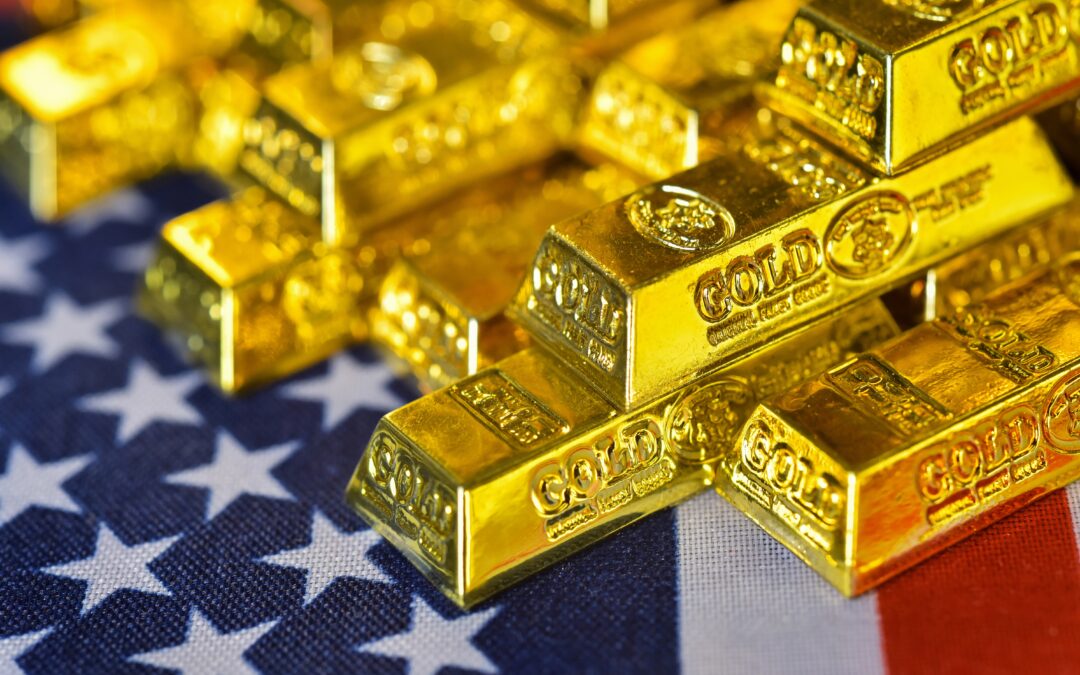
Because after years of watching gold prices tread water under $2,000 an ounce, we’ve seen the metal soar to more than $5,200 practically overnight.
And there are plenty of competing explanations for exactly why this is happening. Some point to global instability due to the conflicts in Iran and Ukraine, or the US government’s excessive money-printing and growing inflation.
But none of these “easy” explanations really gives us the whole story.
Instead — as we so often find here in Moneyball Economics — the real explanation for gold’s decline is hiding in the data.
Click below to start this week’s episode:
Video transcript:
Welcome to Moneyball Economics, I’m Andrew Zatlin.
The price of gold has collapsed this year.
It started off $5,200/oz. Now it’s down to $4,000. That’s a 20% plus collapse in price … and the bleeding’s not limited to gold. It cuts across all safe haven assets. Look at silver. Look at Bitcoin. All of them have seen their prices collapse as well.
And there are a lot of theories being thrown out there right now as to why. Theories about what’s going on with the market expectations around interest rates or inflation, global uncertainty.
How about none of the above?
See, I’ve done the Moneyball Economics thing. I’ve looked at the numbers. I’ve identified the trend that’s at play right now and guess what? You’re not hearing it. So today I’m going to tell you what’s really going on with these safe haven assets and why you can expect even more price collapse.
And it starts off with — what is a safe haven asset? Why do we call gold a safe haven?
It’s because at any point in time, there’s a limited supply of gold. There’s only so much more gold that can be mined. There’s only so many more Bitcoins that can be produced. And because of that limitation, there’s a sort of a constant value, an intrinsic value. What happens then is what’s going on with the currency that we’re pricing gold in. So what’s happening with the dollar? Because the value of the dollar gets debased every year because of inflation. It gets debased if we print money. It changes also depending on what’s going on with interest rates.
Gold is simply reflecting in the near term what the expectation is with where the dollar is going. And it’s held true until it went off the rails recently. I’m going to explain why it went off the rails.
But first, let’s talk about that historical truth.
Go back to what was going on with gold prices and the dollar by looking at pre- COVID. $1,500 was the gold price pre- COVID. Then COVID hits and what do we do? We bomb interest rates, bring them down to 0%. We print $22 trillion. Inflation soars 30%. Well, gold behaves rationally. If inflation’s up 30%, then the gold price is going to go up 30% and that’s what it does. It goes from $1,500 to $2,000.
Now, as we continue after COVID, we start to raise interest rates. Okay, well, that raises the price and value of the dollar. So in turn, gold goes down. So we have a rational relationship between what’s happening with gold and what’s happening with the dollar and inflation. And yet that rational relationship falls apart starting at around ‘23 and 2024. Gold starts accelerating.
We’re not doing anything very significant with interest rates and inflation’s going down, but gold is accelerating. From 2023 to 2025, gold doubles in price.
What’s going on there?
Well, it’s not interest rates. Interest rates, they don’t really budge that much after we raise them. And so there’s nothing there to explain why gold would double because interest rates going down a fraction is not enough to justify that. What about inflation? Well, inflation’s going down, not up. So again, nothing to justify this doubling. Well, what about world events? Well, the Ukraine war is still going on and started well before gold prices surged. And the Hamas attack on Israel, well, gold had soared almost $1,000 before that happened.
No, we’ve got to look somewhere else. And the truth is it is an economic signal, but it’s a new one and it has to do with the fundamentals of economics with supply and demand.
You see, what’s going on here is, again, go back to the reason why they are a safe haven asset. There is at any point in time a limited amount of gold out there, but demand suddenly shifted starting in 2022. Central bank demand. Central banks are always buying gold, but they buy about 500 metric tons every year. In fact, in 2021, they bought about 460 metric tons.
But guess what? From 2022 to 2024, that’s three years, banks are buying almost 1,100 metric tons. They take that 500 normal amount and dial it up substantially. So what happens when demand surges like this? Well, look at what happens with the gold price.
At first, gold doesn’t respond dramatically in 2022, but that’s because the central bank demand is basically soaking up all the excess supply. But you come back in 2023 and you repeat that demand, all of a sudden that demand’s outstripping the available supply.
And so gold starts to respond.
Demand higher than supply. And it continues 2024. Suddenly gold is going from $2,000 to ending the year in 2024 at $2,600, about a 30% jump. Well, along the way, as this demand continues, supply is starting to enter the picture, but it’s not there yet. And so you still have high demand last year in 2025, not as high as previous years, not at this almost 1,100 metric ton. It’s 863 metric tons and that’s key.
At the beginning, in the first half of 2025, demand continues to outstrip supply. Wow, gold is surging, it’s surging, it’s surging, and there’s more supply now. And that’s the problem because then the central banks pull the rug out from under everyone. Central bank buying starts to slow again. Now that’s a problem because all of a sudden demand is going down and you’ve got all this FOMO obviously acting as well.
But basically the demand slows down and supply has been ramping up.
So you got to change in the demand supply curve. And guess what? Fast forward to this year, that demand has collapsed. In the year to date, only about 250 metric tons have been purchased by central banks. So we’re on course to return to that 500 metric turn level.
Well, guess what? There’s still more supply coming up.
What I’m saying and why I see more bleeding to come is that we had, as you can see in this chart, when you strip out central bank purchases, we had demand go up, gold prices responded accordingly and now demand has gone down. Gold prices are responding accordingly. Will we go down to that $2,000 level of 2022? I don’t think so. Not entirely, but we’re definitely heading to below 3,000. Buckle up because this is going to create a lot of concern out there.
Be prepared.
It doesn’t send out the economic signal that everyone thinks. It’s just talking about supply and demand.
However, it now is on track to going back to the traditional relationship of what’s happening with the dollar, what’s happening with inflation and interest rates. If we’re going to be hawkish with the dollar and raise interest rates, that’s a major leg down in gold. And the reason it affects silver and Bitcoin is quite frankly, they’re just gold light. They’re just versions of buying gold. See what happens with Bitcoin because I suspect it’s not going to be able to hold its value as much as silver will because it’s still kind of mythical as are all cryptos.
Folks, we’re in it to win it.
Zatlin out.
Andrew Zatlin
Editor, Moneyball Economics