

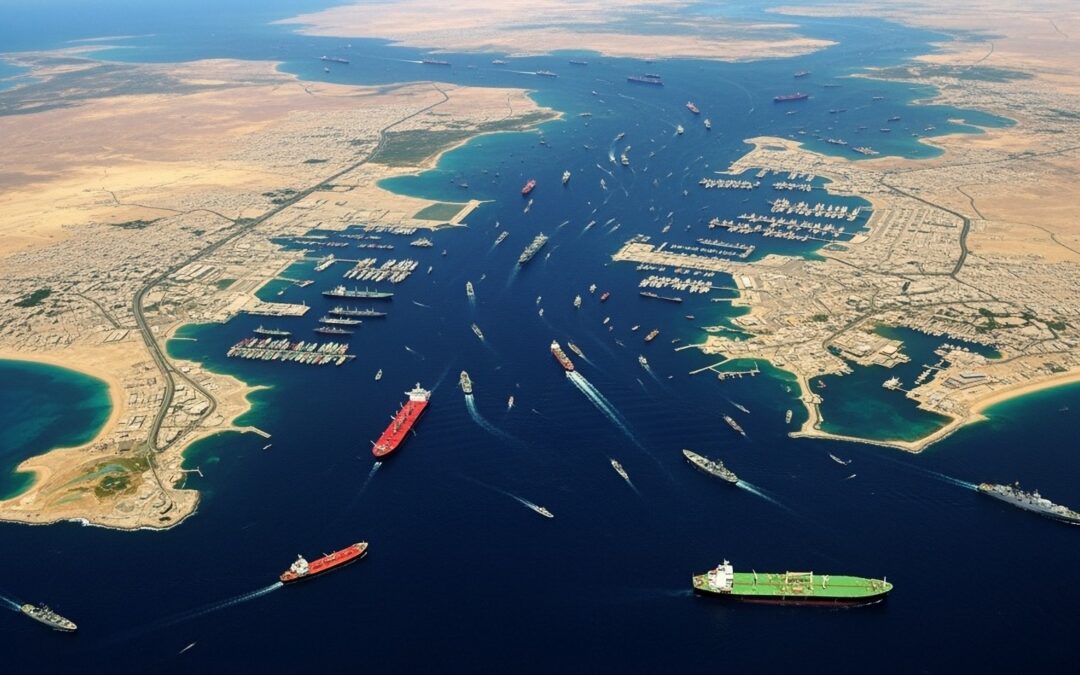
At its narrowest point, the Strait of Hormuz is just 21 miles wide.
Yet, this slender stretch of water is one of the most critical trade corridors on Earth — linking Europe, Asia and the Middle East.
An average of 138 vessels — most of them Very Large Crude Carriers (VLCCs) and liquefied natural gas (LNG) carriers carrying much-needed fuel to ports all over the world — travel through it every 24 hours, far surpassing the Panama Canal’s 35 daily transits.
Nestled between the Persian Gulf and the Gulf of Oman, the Strait of Hormuz carries 20% to 30% of the world’s seaborne oil every year.
From the tip of Oman to the Iranian coast, this narrow passage moves more ships — and more energy — than the Panama Canal, making it one of the busiest and most strategically vital waterways on the planet…
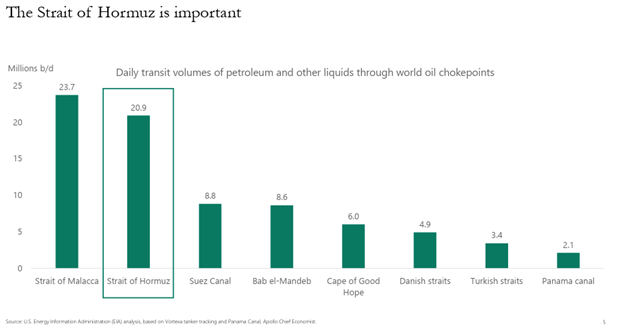
Ships use the Strait of Hormuz to carry oil from the Middle East to destinations such as China, Vietnam and Europe.
Following the recent U.S. strikes against Iran, this 21-mile central trade passage is in danger of seriously disrupting the flow of oil and gas globally.
Let me explain one particular aspect of this situation that the mainstream media is ignoring and give a glimpse of the stocks impacted by it through the lens of Adam’s Green Zone Power Ratings system…
More Than Just the Cost of Oil
When you think about the true cost of oil, it’s common to focus solely on the hard price of the commodity itself.
However, that’s not all included.
You also have to factor in shipping costs, because suppliers incur them when shipping anything from oil to wheat.
Shipping costs for Middle Eastern oil are particularly crucial because they impact global energy prices, inflation and supply chain stability.
These costs have recently taken a dramatic turn higher…
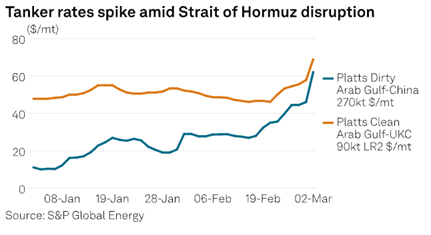
Global energy analysts at Platts assessed the rate to carry a 270,000 metric ton cargo of crude oil from the Persian Gulf to China.
On March 2, the cost to move cargo from the Middle East to China was $62.07 per metric ton. That’s up 461% from the start of the year.
The cost to ship 90,000 metric tons of refined oil from the Persian Gulf to the United Kingdom was $68.89/mt… a 44% increase from the start of the year.
The five-year average of shipping to China and the U.K. is $13.18/mt and $48.30/mt, respectively.
Not only are shipping prices through the Strait of Hormuz increasing, but traffic is also down.
On March 1, only 26 vessels passed through the strait — down from 91 the day before. Keep in mind, average daily traffic in the strait in February was 135 vessels.
So it’s not only taking more time to ship, but it’s also becoming more expensive.
Shipping Company Benefits From Conflict
It’s certainly not an advertising slogan to suggest you benefit from any kind of global conflict.
However, increased costs and fees for rerouting tankers away from the Strait of Hormuz are helping shipping companies come out ahead.
Global shipping companies use the most direct route to move cargo from one place to another. That reduces costs to the shipper and the shipping company.
With Iran essentially closing the Strait of Hormuz, shipping companies in the region now have to assess different, longer routes… passing those costs on to oil and gas companies.
Not to mention the increase in insurance costs shippers have to incur due to the current climate.
Even before the conflict with Iran, shipping company stocks were running warm.
So, I screened for stocks in the cargo transportation industry that rated “Bullish” or higher on all six factors of Adam’s Green Zone Power Ratings system.
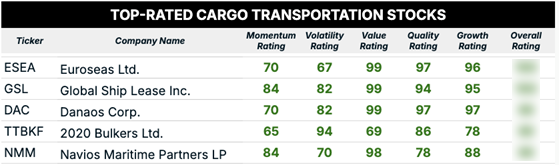
I came up with a list of five shipping companies that rated in the green overall.
These aren’t the largest shipping companies in the world. And their individual factor ratings, while in the green, differ from stock to stock.
That’s why I encourage you to utilize Adam’s ratings system and see what stands out to you.
That’s all for me today.
Until the next time…
Safe trading,

Matt Clark, CMSA®
Chief Research Analyst, Money & Markets